
 Products
 Inquiry
Form loading...
Many of the common challenges encountered by enterprises in the selection of a Two-Stage Screw Air Compressor can be a strong factor in curbing their operational efficiency and overall productivity. The complexity of different models, divergent specifications, and the uniqueness of application requirements could add lots of burden to the decision-making process. Further, it would make it static for an organization trying to achieve maximum optimality to also understand how a Two-Stage Screw Air Compressor can be incorporated in the existing systems and what its long-term maintenance obligations will include.
These are challenges that ZIQI Compressor (Shanghai) Co., Ltd. is fully aware of and focuses on providing top-quality solutions that meet the diverse needs of industries. We are one of the top air compressor system manufacturers in Shanghai and harness superior global components to produce systems that run on durability, energy efficiency, and high productivity. With our understanding of and expertise in Two-Stage Screw Air Compressors, companies will be able to qualify early during their selection phase and reap long-term gains from improved operational capability.

The fundamentals of two-stage screw air compressors are basic yet important given the intricacies of industrial air compression. Compared to one-stage compressors, two-stage compressors operate two sets of rotors to provide much more efficient air compression. A report published by the Compressed Air and Gas Institute (CAGI) declares that two-stage systems could operate as high as 15% more efficiently when compared to their single-stage designs. Thereby, this increased efficiency means lower energy costs and enhances the overall performance of pneumatic tools and applications in various industries. The two-stage compression process really cuts down on the heat issues generally associated with running air compressors. A study by the International Society for Airborne Science provides evidence that working temperatures could drop by as much as 20% with two-stage systems. This temperature drop translates to smooth stable output pressure rates, essential for a manufacturing process that depends on precise air specifications. Furthermore, another advantage of reducing temperatures is the extended service life of the compressor, which gives savings on downtime and maintenance. Another consideration is the noise of the compressor. Two-stage screw air compressors are generally quieter than single-stage machines because of their efficient construction and lower RPM, making them well-suited for use in noise-sensitive settings. The Environmental Protection Agency (EPA) reported that noise levels in these machines are lowered by as much as 10 dB relative to single-stage machines for an overall more favorable working environment for employees. All in all, a strong understanding of the operational advantages and specifications of two-stage screw air compressors can help guide companies in their selection process so that work can progress in productivity and sustainability.

That's why businesses need to check energy efficiency of the two-stage screw air compressor for reducing their operating costs and improving the productivity of their processes. An energy-efficient compressor saves on electricity costs and minimizes the impacts of industrial activities on the environment. Considering that air compressors constitute a large percentage of the energy consumed in factories, this makes understanding the implications of energy efficiency very appropriate.
The specific energy consumption (SEC) of the compressor is one of the parameters to be considered. This defines a measure that has a quantifier of energy that gets transformed into the production of a given unit of compressed air. Efficiency of compressors is denoted by their lower SEC values, which means that they will be able to produce the same quantity with less energy. Another additional aspect could be the usage of variable speed drives because they adjust operations even concerning the actual demands, thus saving further energy and money.
Additionally, absorption of energy efficiency is reflected in total cost ownership (TCO). Apart from purchase price, owners also consider as well maintenance costs, likely downtime, and other utilities consumed during the compressor's lifespan. In this sense, an energy-efficient compressor may require a higher initial cost, but it will be a net savings over life for its high operational savings and reliability. Increased emphasis on energy efficiency of compressors minimizes the carbon footprint of production and advances sustainable outcomes from a business perspective, hence matching corporate financial goals with international environmental initiatives.
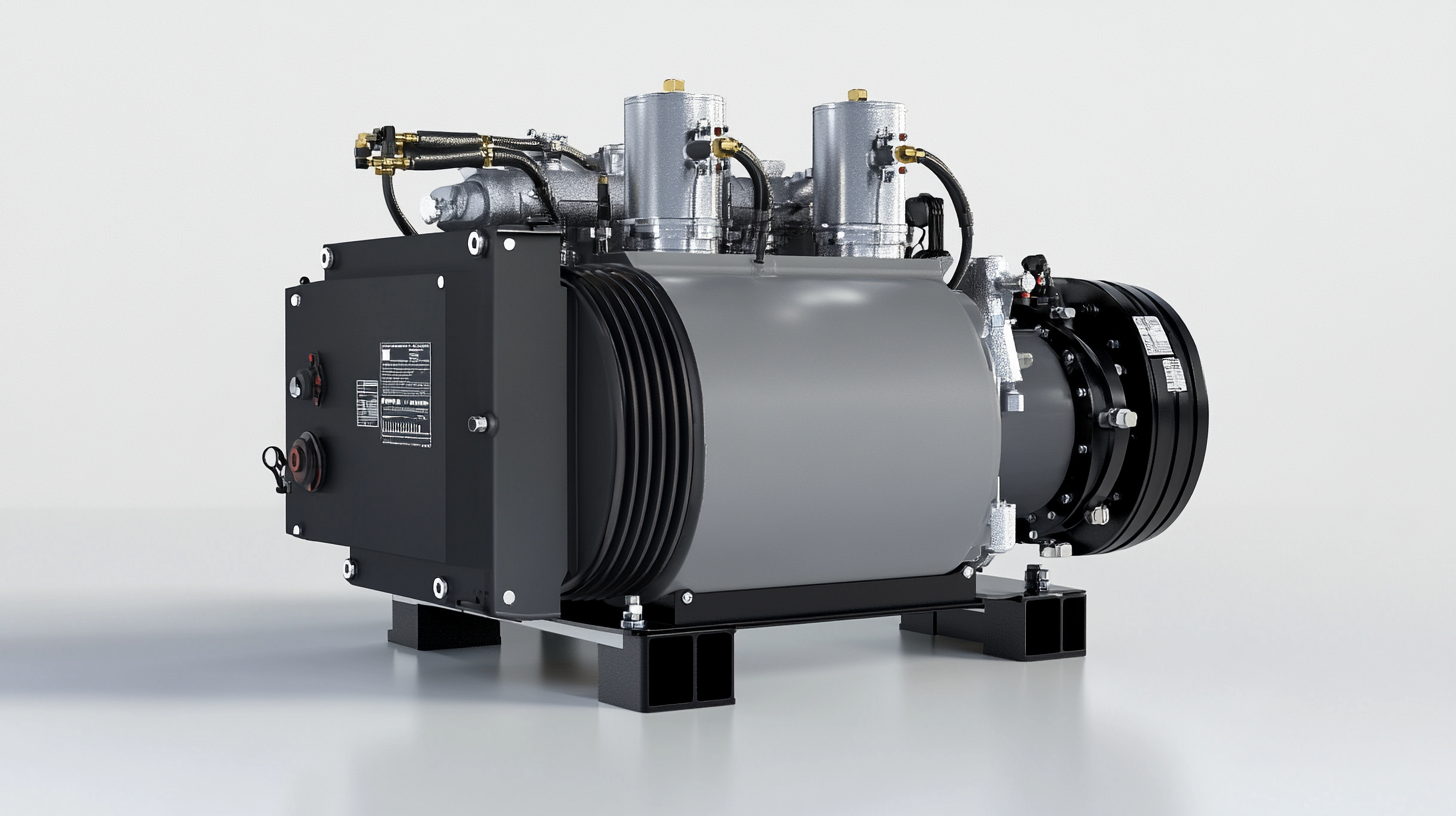
The efficiency and performance of air compressors become the points of differentiation under consideration for companies when deciding on either two-stage or single-stage screw air compressors. The advantages of two-stage compressors appear to parallel that seen with advancements made in consumer electronics, not unlike the advancements from single-core to dual-core CPUs in computing. This analysis shows that, like the dual-core paradigm, two-stage compressors are more efficient and produce more for industries demanding intense and continuous air supply.
Current trends within the HVAC industry include the emergence of two-stage compression technology for residential variable-frequency air conditioners, a trend pushed by manufacturers like Gree. The trend is gaining momentum: two-stage systems save energy while improving cooling performance, much in the same way as with air compression benefits. An anticipated surge in the oil-injected air compressor market, spurred by technological advancement, might put companies at a crossroads: to promote traditional single-stage systems or embrace a progressive two-stage compressor culture.
It has been observed that the other compelling benefit is the economic one accrued over time through two-stage compressor installation and improved performance. The less energy consumed translates into lower operational costs. The improvement of the two-stage systems in reliability and durability means fewer maintenance hours. With environmental regulations tightening, users who embrace energy efficiency in this market sector will favor the advanced features of two-stage compressors and position themselves prominently on a market with an increasing appreciation for sustainability alongside performance.

Key performance parameters are critical in two-stage screw air compressor selection as they would affect its efficiency and productivity. One of the most important performance parameters to consider is the compressor flow rate, usually in cubic feet per minute (CFM). A good understanding of the flow rate specific to your application ensures that the compressor is exactly meeting the demands of your operation without undue energy wastage or wear and tear.
Another important performance parameter is efficiency rating-much higher efficiency denotes lesser energy usage, and thus the operational cost is lower over time. Look for models that are efficient across different levels of loads because this would increase the flexibility, productivity of operation while decreasing energy wastage. Also, consider the ratio of power consumption to output of the compressor for indications of its performance and reliability.
Also, take a moment to check noise levels. Two-stage Screw Compressors vary in noise emissions, and a lower-noise model would enhance the working environment, especially in facilities that need a more controlled acoustic setting. Lastly, consider product durability and maintenance, as this ensures less downtime and a longer service life for the company, thus ensuring maximized ROI.
Maintenance aspects are critical in the selection of a candidate for a two-stage screw air compressor and the justification for incurring long-term costs and benefits. In short, many businesses pay little attention to future maintenance implications as they make short-term purchase savings. Most organizations are realizing that a more expensive, better-quality compressor is cheaper to operate and will cause less downtime in the long run.
Furthermore, it coincides with the overarching trend of having the air compressor run efficiently in order to be cost-effective and reliable in the end. As in other industries, such as transportation, where short-term agreements may hide other costs in the long run, manufacturers have to look at the total cost of ownership of their choices concerning their compressors. Proactive maintenance, together with sound purchasing decisions, can amount to a windfall from long-term savings, well fit for operational efficiency.
When it comes to industry trends, it will be more important for businesses to understand how their choices in equipment will impact lifetime values. I think that this not only meets immediate functional demands but also serves to prepare an organization for challenges in the future, thus creating a strong case for comprehensive maintenance planning as well as investment in reliable technologies.
Company energy efficiency has an immediate effect on recent developments in compressor technology, which have, in turn, accelerated the advancement of compressor technology under the energy-efficiency and sustainable-practice headings. Recent market reports project a high growth potential for the air compressor market in the coming years: approximately 4.5% CAGR is projected for the period ranging from 2023 to 2030, hinting at further demand in compressor solutions of advanced technology and reliability.
In the meager half-century multiplicity of designs and innovation has been used to improve the utility and efficiency of air compressors. The latest variable speed drives and smart compressor controls have initiated a paradigm shift in the way energy consumption and system reliability are perceived in the industry. Industries are now focusing their investments on high efficiency technologies that will cut down on operating costs as well as on their environment. Likewise, with the integration of IoT in compressor systems, real-time monitoring and predictive maintenance can enhance the service life and optimize the performance of these machines.
The 2024 conference on refrigeration is set to put this increasing focus on technological breakthroughs into perspective and will feature a display of leading manufacturers' innovations. This will put emphasis on system-level solutions that not only enhance the performance of compressors but also align perfectly with contemporary HVAC applications. Since emerging trends will always improve, organizations would earn their keep in compressor selection if they kept abreast with evolving technologies and thus make sure that compressor solutions are up to par with their operational demands-past, present, and future.
One of the most crucial aspects of a two-stage screw air compressor is sizing and capacity. The final point is that one must ensure that the compressor meets the operational demand for ensuring optimal performance. A small compressor or too big-a compressor will lead to inefficiencies and operational costs. Therefore, one should first assess the air requirements, which will include peak demand and average hours of usage to arrive at a capacity requirement for the operations.
Current trends in various industries simply call for scale-in capacity. For example, wind turbines have been constructed larger in order to enhance energy generation. The same principle applies to the air compressor: businesses should analyze current and future production needs before selecting a compressor that can scale up. A well-sized machine not only maximizes efficiency but also provides better long-term reliability.
Strategically significant performance-based approaches will be fundamental to maximizing the potential of the air compressor. Employee capacity-performance relationships clearly link to optimum operational performance, as shown in the operational studies conducted by different organizations. The selected and properly sized compressor will enable teams to optimally maximize their workload without wastage of energy or time. Thus, a good two-stage screw air compressor is becoming indispensable for future success, even as industries keep changing and growing.
A company that wants to select a two-stage screw-type air compressor faces a very complicated set of regulatory compliance conditions. Industry standards depend upon location, application, and machine- or system-specific characteristics, thus making an understanding of these regulations very important since any incidence of violations could be consequential in terms of fines, production interruptions, or reputational harm.
One major constraint is the timely updating of relevant regulations. Various industries, such as healthcare, manufacturing, and energy, are complying with very stringent standards, such as emission limits, noise restrictions, energy efficiency, etc.; thus, a company must consider both the current regulation and foresee potential changes in regulatory outlook in the future to determine whether its equipment would remain in compliance in the long term. Quite some time and resources will now be needed to do internal research, and, if necessary, engage outside counsel or compliance experts.
Moreover, the complexity of integrating compressor systems into existing operations raises another challenge. Each facility has peculiar operational workflows and environmental issues that must form part of the selection process. For instance, in order to fill in a certain safety standard, a different installation might need to be designed just to minimize the impact on the environment from the company's operations. This scenario presents the need for careful planning and synergy among engineering, operations, and compliance teams so that the selected compressor solution actually achieves its intended purpose-without any regulatory impediments.
Two-stage air compressors operate at higher efficiency levels and can deliver greater output compared to single-stage compressors, making them more suitable for industries that require a continuous air supply.
The introduction of two-stage compression technology in household variable frequency air conditioners has led to reduced energy consumption and improved cooling performance, driving a growing preference for this technology.
Two-stage compressors lead to lower operational costs due to reduced power consumption and decreased maintenance needs, resulting in notable long-term savings.
As environmental regulations tighten, companies aiming for energy efficiency are likely to favor two-stage compressors, which offer advanced capabilities aligned with sustainability goals.
The air compressor market is projected to grow due to advancements in technology focused on energy efficiency, with an expected CAGR of around 4.5% from 2023 to 2030.
Enhanced variable speed drives and smart compressor controls are improving energy consumption and system reliability, helping manufacturers to reduce operational costs and environmental impact.
IoT allows for real-time monitoring and predictive maintenance of compressor systems, which can extend their lifespan and ensure optimal performance.
The conference will showcase technological breakthroughs and systems-level solutions that enhance compressor performance and integration into modern HVAC applications.
Staying informed about emerging technologies and trends in compressor design is crucial for companies to meet both current and future operational demands effectively.
The transition offers improved efficiency, reliability, reduced operational costs, and alignment with increasing sustainability practices in the marketplace.


